
Start small, measure, then scale
Everybody wants to "implement AI", but the best results come not from big ambitious projects but from automating one boring process that the team repeats every day.
Sorting incoming requests, entering invoices, preparing reports, answering typical emails, screening CVs — such tasks take hours every week and are perfect for automation: they have clear rules and the result is easy to check.
In this article I share how to choose the first task, which tasks pay off fastest and how to keep control over what AI does.
How to find a task worth automating
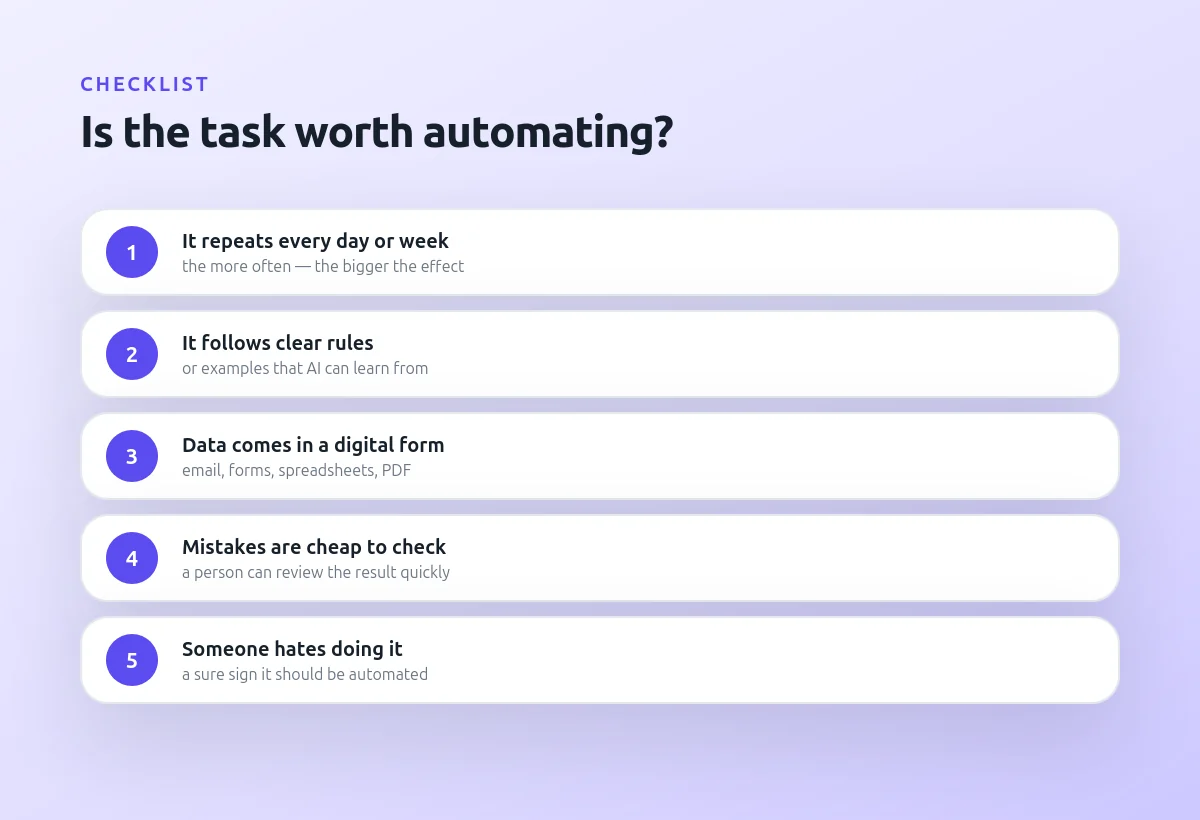
Look for tasks that repeat often, follow understandable rules and work with digital data: emails, forms, spreadsheets, PDF files. If a mistake is cheap to notice and fix, the task is a good candidate.
One more reliable sign: somebody in the team really hates doing it. Usually that is exactly the routine that steals time from more important work.
Five questions to ask:
- It repeats every day or every week
- It follows clear rules or examples
- Data comes in a digital form
- The result is easy to check
- Someone in the team hates doing it
Tasks that pay off fastest
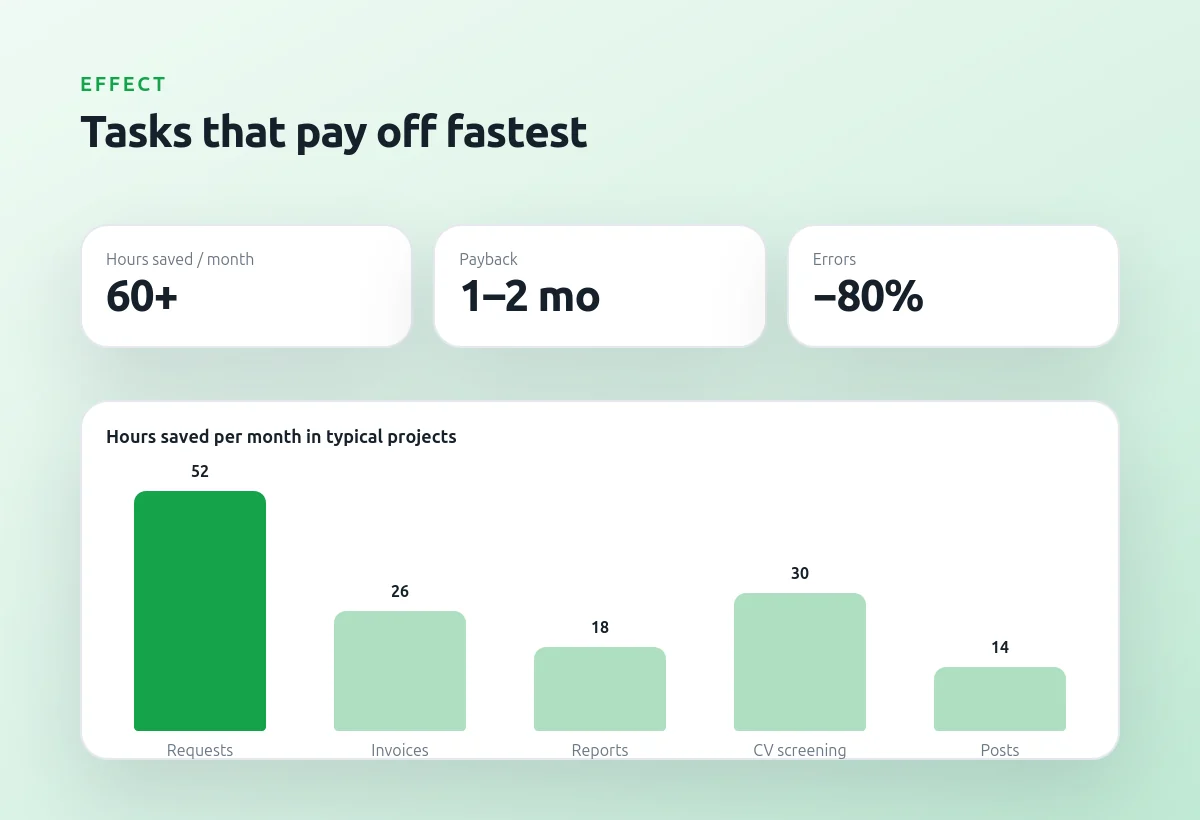
In my projects the quickest effect comes from processing incoming requests: AI reads the message, finds the topic, budget and urgency and creates a deal in the CRM. Next go invoices and documents — AI extracts the fields and fills in the table.
Weekly reports, social media posts and CV screening also save a lot of time. Usually the automation pays for itself within one or two months.
What I automate most often
- Sorting and routing incoming requests
- Reading invoices and documents
- Reports and summaries on a schedule
- Content drafts and CV screening
AI prepares, a person decides
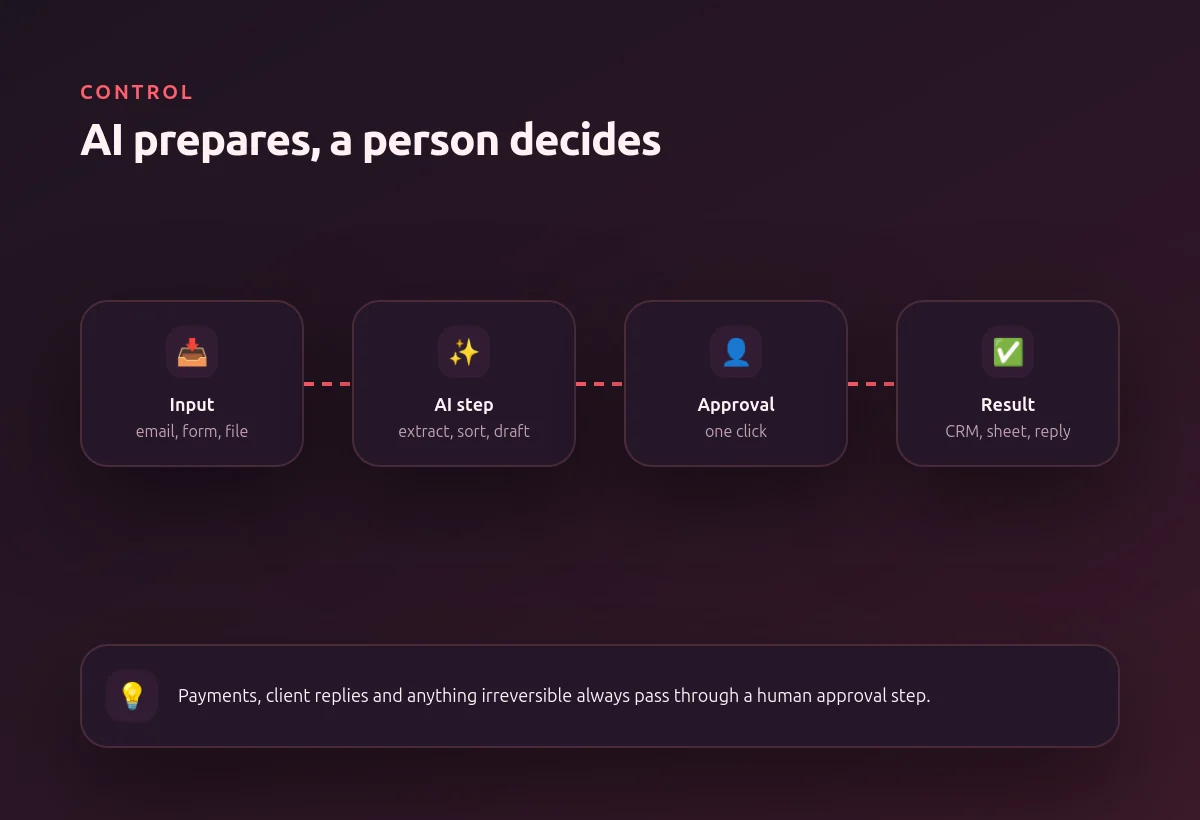
I build workflows in n8n, Make or with custom Node.js code, and in every one of them there is a clear rule: important and irreversible actions pass through a human. AI can draft a reply to a client, but a manager sends it in one click.
This keeps quality high, and the team trusts the automation because it sees what happens. Over time, when the results are stable, some approval steps can be removed.
Control is part of the workflow
- Approval step for payments and client replies
- Logs of every run
- Notifications when something goes wrong